TikTok’s Creator Rewards Programme Skipped South Africa. Here’s Where Things Stand.
TikTok’s Creator Rewards Programme still isn’t open to South African creators, and government is now pushing back. Here’s who has said what, and how creators can earn in the meantime.
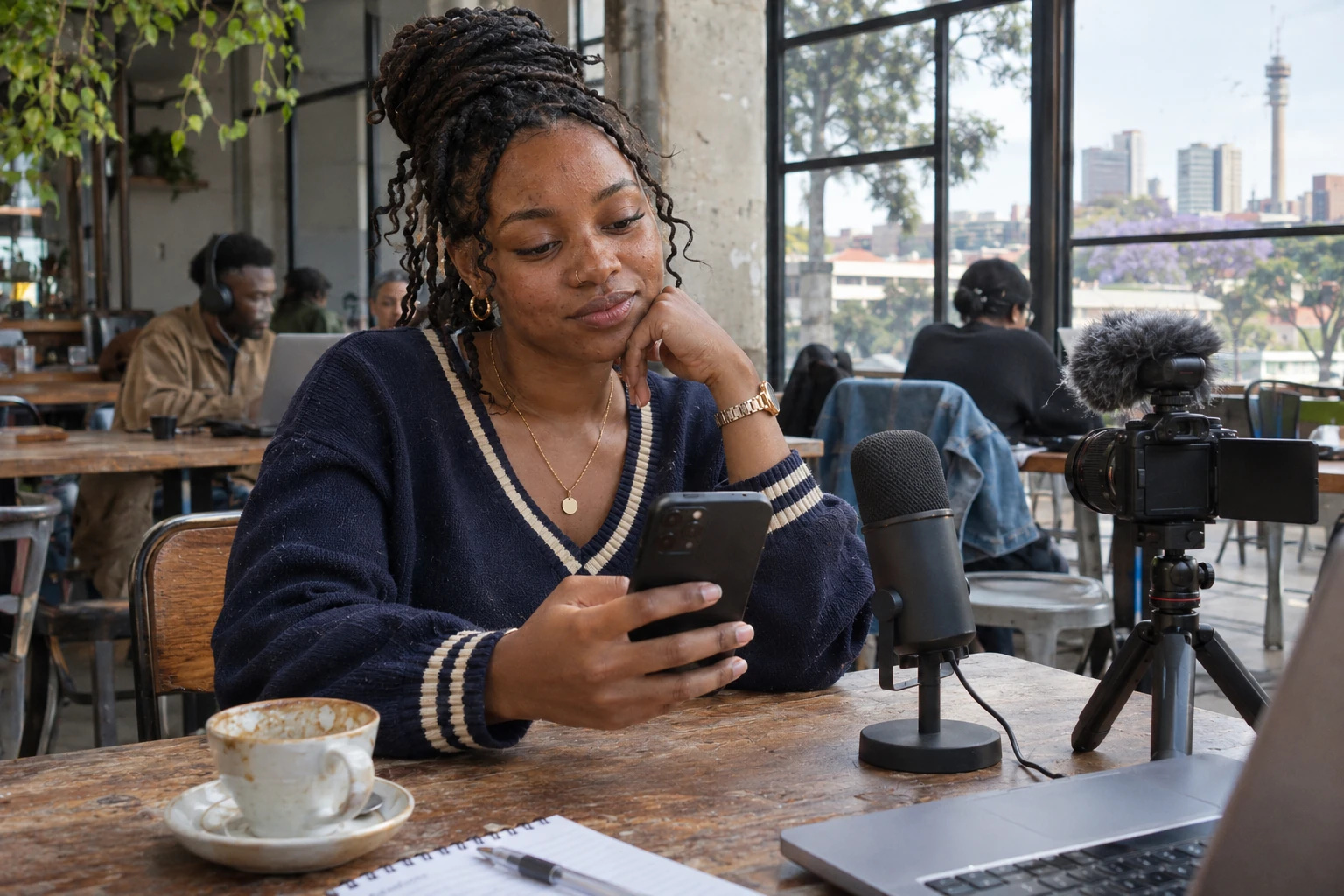
South Africans have made TikTok their own, from comedy and dance to cooking, fashion and hustle culture. Yet as of November 2026, the feature that pays creators directly for their views, the Creator Rewards Programme, still isn’t available here. What began as creator frustration has become a government talking point, so here is where things stand, and what you can do while the debate plays out.
What is the Creator Rewards Programme?
It pays creators for how their videos perform, and it replaced the Creator Fund, which TikTok closed in 2023 after limiting it to a handful of countries, according to Business Day. ITWeb’s July 2026 count has it in eight markets: the US, UK, France, Germany, Japan, South Korea, Brazil and Mexico. TikTok itself had earlier cited seven. No Sub-Saharan African country is on the list, which also leaves out Kenya and Nigeria. Reported figures for South African TikTok users vary by source and year, from about 17 million to roughly 29 million adults.
What government has done so far
Based on public reporting, South Africa’s approach has been public pressure and direct talks with TikTok. We haven’t found reports of a law, directive or penalty compelling TikTok to open the programme here.
In late March 2025, Communications Minister Solly Malatsi used TikTok’s Safer Internet Summit in Cape Town to publicly ask the platform to extend its monetisation programmes to South African creators. He said TikTok committed to taking the feedback on board and continuing engagements, as Cape Argus reported. In March 2026, BOSA leader Mmusi Maimane called for a conversation on public funding for TikTok creators and podcasters, with The Citizen reporting a R1 billion idea.
In July 2026, Malatsi said government had repeatedly engaged TikTok without a breakthrough, would keep advocating, and wanted other African countries on board for a coordinated approach, according to ITWeb and EWN. In late September, he told eNCA that South African creators should get the same treatment as creators in the US and UK, IOL reported. Then, on 1 October 2026, TikTok launched TikTok One Creator Marketplace in South Africa, as Business Day covered.
Malatsi frames the issue as economic justice and as part of the future of work. He argues that market size shouldn’t decide who gets paid, and told EWN that “nothing justifies their exclusion.” To IOL he called it “a form of economic exclusion that we’re trying to fight against.” In the same July discussion he pointed to recent SARS guidance on declaring income from digital content as a sign the creator economy is being taken seriously.
Politicians don’t all take the same route. Business Day noted that Malatsi and Maimane both want TikTok to compensate local creators, but through different approaches. Maimane framed it as a funding question and called for “a round table discussion about the funding of podcasters and TikTok creators.” Some creators are also cautious about state involvement. Wits Vuvuzela reported creator worries that it could bring registration and contract requirements.
What creators and experts say
Social media lawyer Lerato Ntwampe told ITWeb: “Access to these programmes should not depend on where a creator lives.” She added that brand deals are valuable but don’t replace platform-funded income.
The frustration isn’t only South African. Kenyan tech creator Roy Kanyi told The EastAfrican: “TikTok doesn’t pay us directly, as YouTube and Meta do.”
TikTok’s side
TikTok’s Sub-Saharan Africa content operations head, Boniswa Sidwaba, has said Africa wasn’t deliberately excluded and that “we must test products before launching them globally,” as Broadcast Media Africa reported. Responding to ITWeb in July 2026, TikTok said it is exploring ways to reward creators and pointed to live gifts, video gifts, subscriptions and Work with Artists.
In October, it added TikTok One Creator Marketplace, where brands discover and pay creators for campaigns. In a trial, Vodacom reported that creator-led content beat its more polished assets, with a 300% lift in view-through rate and a 30% lift in click-through rate. Those are TikTok’s figures. Business Day also pointed out that this is a brand-funded marketplace, unlike YouTube’s pool of funds for creators.
Why this matters
Here’s our view. A marketplace pays you when a brand picks you, while a per-view programme pays you for the work itself. Brand-funded systems tend to favour creators who already have scale and connections, so smaller creators can post consistently for months and still earn nothing. The marketplace is a real opportunity. The lesson is not to rely on any single platform for your income.
What creators can do right now
- Use every TikTok tool that is available. LIVE gifts, subscriptions and TikTok One all count.
- Diversify across platforms. YouTube’s Partner Programme does pay for views in South Africa, so repurposing your best content there can open another income line.
- Build an audience you own. A WhatsApp community, an email list or a Telegram channel can’t be switched off by an algorithm.
- Let your fans support you directly. The people who already love your content are often your most reliable income, and they don’t need a platform’s permission to back you.
That last point is why we built Tipping Jar: support that adds up, straight from your community to you.
The pressure on TikTok will probably continue. Your income doesn’t have to wait for it. Start your jar today.
References
- Govt pushes for ‘economic justice’ for TikTok creators, ITWeb, 22 July 2026
- Minister renews push for TikTok to pay local creators for content, EWN, 24 July 2026
- ‘Pay our creators’: South Africa turns up pressure on TikTok, IOL, 29 September 2026
- TikTok hopeful about new monetisation platform for local creators and influencers, Business Day via TimesLIVE, 1 October 2026
- TikTok’s monetisation gap: Minister Malatsi calls for economic equity, Cape Argus, March 2025
- Mmusi Maimane calls for R1 billion for TikTok and podcast content creators, The Citizen, 2026
- TikTok goes the clock as creators gun for monetization, Wits Vuvuzela, April 2025
- TikTok defends monetisation strategy amid criticism, Broadcast Media Africa
- Tick tock, tick tock… African TikTokers wait for big payday, The EastAfrican
- Why Kenyan content creators don’t get paid by TikTok, Nation Africa